Beard vs. Chest Hair: Can Body Hair Be Transplanted to Scalp Safely?
For individuals experiencing advanced hair loss, a traditional hair transplant might present a major hurdle: a lack of sufficient donor hair on the back of the scalp. Fortunately, modern restorative medicine has opened up new frontiers. On your journey with Health & Beauty, exploring innovative solutions like Body Hair Transplantation (BHT) can offer renewed hope. But when it comes to alternative donor sites, which area reigns supreme?
This comprehensive guide compares beard and chest hair as alternative donor sources, assessing their safety, efficacy, and the critical biological differences you must consider before booking a procedure.
What is Body Hair Transplantation (BHT)?
Body Hair Transplantation is an extension of the standard Follicular Unit Extraction (FUE) technique. Instead of harvesting hair follicles exclusively from the occipital scalp (the back of the head), a surgeon extracts follicular units from alternative areas of the body, such as the beard, chest, back, or abdomen.
The Role of FUE in BHT
Because body hair grafts must be harvested individually to avoid severe scarring, the FUE method is non-negotiable for BHT. The surgeon uses a micro-punch tool to carefully isolate each hair follicle before placing it into the thinning zones of the scalp.
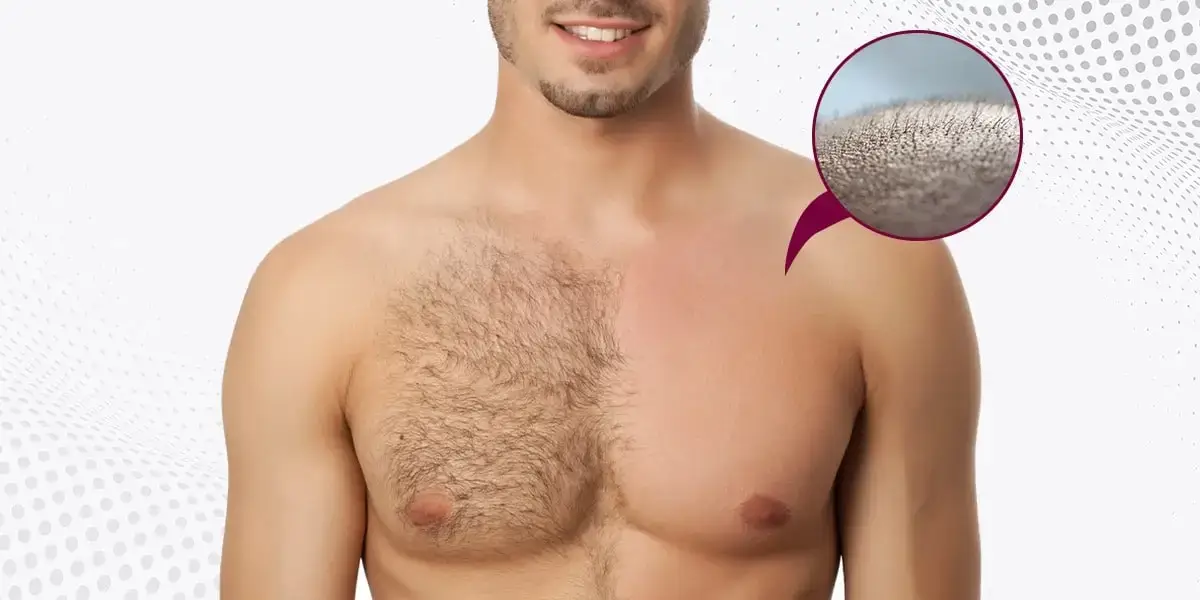
Beard Hair: The Gold Standard of Body Donor Sites
When scalp hair is unavailable, most top-tier hair restoration surgeons turn to beard hair first. It is widely considered the most reliable alternative donor source for several physiological reasons.
High Growth Rate and Thickness
Beard hair is naturally thick and coarse. Its caliber (diameter) is often significantly greater than regular scalp hair. This physical characteristic provides excellent visual volume and coverage, making it ideal for filling in dense areas like the crown or mid-scalp.
Favorable Growth Cycle
Hair follicles cycle through growth (anagen), resting (catagen), and shedding (telogen) phases. Beard hair spends a relatively long time in the anagen growth phase compared to other body hairs. This means that once transplanted, beard hair will continuously grow longer and shed less frequently than hair harvested from below the neck.
Chest Hair: The Secondary Backup Option
While chest hair is a viable option for many men, it behaves quite differently from beard hair and comes with a unique set of challenges.
Finer Texture and Curvature
Chest hair is generally finer, shorter, and exhibits a higher degree of natural curl or wave. Because its texture is less robust than beard hair, it does not provide the same level of dense optical coverage.
Shorter Anagen Phase
The primary limitation of chest hair is its genetic programming. Chest hair has a very short growth phase and a long resting phase. Consequently, transplanted chest hair will rarely grow beyond a few centimeters in length, making it less suitable for matching long hairstyles on the scalp.
Beard vs. Chest Hair: Direct Comparison
| Feature | Beard Hair | Chest Hair |
| Hair Thickness | Very High (Coarse) | Medium to Fine |
| Anagen (Growth) Phase | Long | Short |
| Survival Rate | High (80% - 85%+) | Moderate (60% - 70%) |
| Best Used For | Crown filling, mid-scalp density | Softening hairlines, texture blending |
| Extraction Difficulty | Moderate | High (due to skin elasticity) |
Is Body Hair Transplantation Safely Performed?
The short answer is yes, BHT can be performed safely, provided it is executed by a highly skilled medical team specializing in advanced FUE methods. However, it carries a slightly higher complexity profile than a standard scalp-to-scalp procedure.
Skin Elasticity and Anesthesia
The skin on the chest and neck is much more elastic and mobile than the taut skin of the scalp. This elasticity makes cleanly punching out the follicle more technically demanding. Surgeons must use specialized tumescent anesthesia to temporarily firm up the skin, ensuring the extraction tool does not transect (sever) the delicate hair bulb.
Post-Operative Healing and Scarring
Healing in the donor regions requires meticulous aftercare. While modern micro-punches leave tiny dots that usually fade into virtually invisible white marks, patients with darker skin types or a history of keloids must be evaluated carefully to prevent visible scarring on the face or chest.
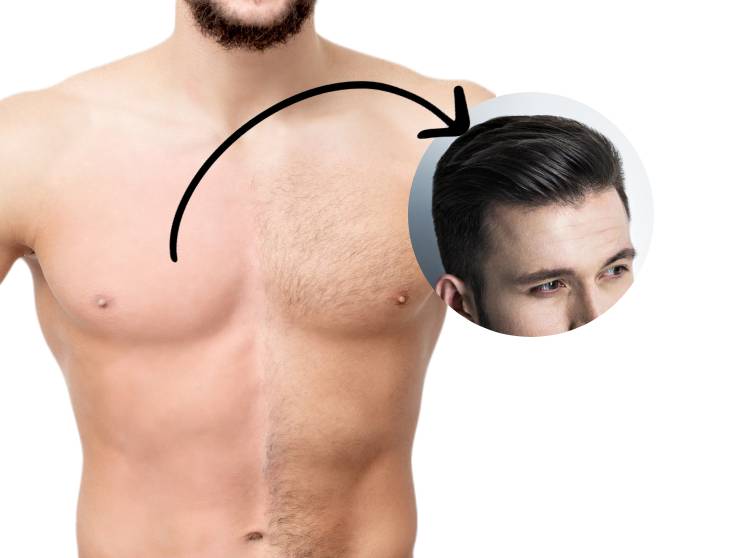
Managing Your Expectations: Setting Realistic Goals
For first-timers or those looking into advanced hair restoration, it is vital to align your expectations with biological reality.
Texture Accommodation
Body hair does not completely change its genetic identity when moved to the head. While some "recipient co-dominance" occurs—meaning the body hair may slightly soften and grow a bit faster over the years due to the increased blood supply of the scalp—a beard hair will always remain thicker and kinkier than a native scalp hair.
Strategy and Placement
Because of these texture differences, experienced surgeons rarely use beard or chest hair to build a brand-new frontal hairline. Doing so would look unnatural. Instead, body hair is strategically mixed behind remaining native hair or used to fill out the crown where bulk volume is required.
Conclusion: The Strategic Value of Non-Scalp Hair to Scalp Transplant
Utilizing alternative donor sites has revolutionized the field of hair restoration, offering a lifeline to those with severe alopecia. While beard hair remains the superior choice due to its thickness and robust growth cycle, chest hair serves as an excellent secondary filler. Ultimately, a successful non-scalp hair to scalp transplant relies entirely on a customized approach, strategic placement, and a thorough understanding of hair biology to achieve a safe, natural-looking result.


Nhận xét
Đăng nhận xét